


ASIC's Year in Review Part 1: Quality Assurance, AI, and Innovation
This year, ASIC helped put our institutions at the centre of the global conversation on AI in education and accreditation.
From the INQAAHE Biennial Conference to the ISC Research Annual Conference and our own International Education Conference in October, the focus was on using AI and digital tools responsibly to enhance leadership, governance, and student outcomes, not to replace human judgment, but to support smarter, evidence-informed decisions.
2025 saw ASIC actively contribute to global conversations shaping how AI and new technologies can strengthen, rather than undermine, quality assurance and governance. At the INQAAHE 18th Biennial Conference in Tokyo, Japan, "The Big Bang Theory: The Quality Assurance Paradigm Shift?", ASIC engaged with international experts on how QA systems can adapt to technological and social change.
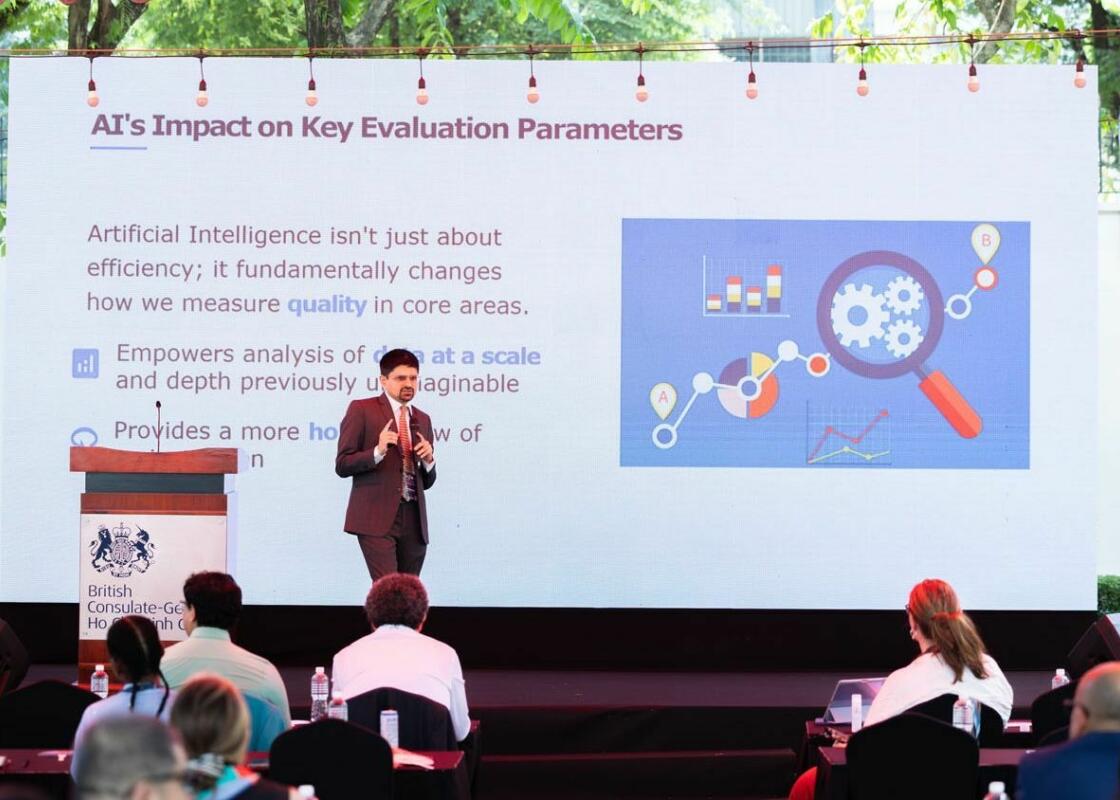
These themes came to life at ASIC's own International Education Conference in Ho Chi Minh City, Vietnam, where expert-led sessions provided practical frameworks for implementation. Dr Hardik Vachharajani's keynote on AI and assurance demonstrated how accreditation bodies are moving from manual, reactive processes to real-time, AI-enhanced quality monitoring, whilst Dr Olgun Cicek explored emerging trends in transnational education and the transformational impact of digital accreditation models.
The conference also addressed critical challenges facing the sector, including global enrolment decline, the digital divide in K-12 education, as well as embedding sustainability and inclusive leadership practices across institutions. Through case studies and actionable insights, the Vietnam conference connected innovation directly to quality improvement, showing how AI and technology, when combined with human judgment and ethical governance, can support institutions in delivering better outcomes for students and communities.
How Accreditation Bodies Are Embracing AI
The conversation around AI in quality assurance has moved from theoretical exploration to practical implementation. At both the INQAAHE Conference and ASIC's Vietnam International Education Conference, accreditation bodies demonstrated a clear commitment to integrating AI into their processes while maintaining rigorous human oversight.
Dr Hardik Vachharajani, ASIC Inspector and representative from Symbiosis University in India, delivered a compelling presentation during the Vietnam conference titled "AI & Assurance: The Future of Quality in Higher Education." His talk highlighted how accreditation agencies and umbrella bodies worldwide are looking to AI to address longstanding challenges in traditional accreditation models by using AI to streamline processes, enhance documentation collation, and enable ongoing monitoring and documentation review in real-time.
Evolving accreditation for human-led, AI-enhanced quality assurance
The key message from both conferences was clear: AI is not replacing inspectors or undermining accreditation rigour, but rather evolving the assurance model. Accreditation bodies must position themselves as ethical guardians and collaborators, embracing hybrid models that combine AI efficiency with human judgment. ASIC, for example, will continue to hold physical inspections for all institutions with a physical presence.
This approach allows accreditation processes to move from periodic, snapshot assessments to continuous, data-informed quality monitoring whilst ensuring that inspectors validate AI-generated insights and maintain the trust and credibility that underpins the accreditation process.
Back in the UK, sessions and networking at the UKCISA Annual Conference in Manchester also touched on the impact of digital systems and AI on compliance, visa processes, and student support. (See Part 3 for further commentary regarding this year's UKVI session.)
Supporting innovation in international education
At the ISC Research Annual Conference (online), ASIC's session "Leading with Impact: Best Practices Across International Schools from an ASIC Perspective" showcased how digital tools can be used responsibly to support leadership, data-informed decision-making, and student outcomes via practical insights that members can translate directly into their own improvement plans. These innovation themes also ran through our conference in Vietnam from K-12 through to Further and Higher Education, where panel sessions and presentations explored data ethics and AI governance, helping institutions navigate opportunities and risks as they modernise their digital infrastructures.
Innovation was not discussed in isolation from investment and international cooperation. At the 4th Education Investment Forum in Jakarta, Indonesia, a high-profile gathering of investors, school owners, and education leaders, ASIC's sponsorship and participation helped ensure conversations about edtech and new models of provision were grounded in robust QA and student protection, providing reassurance for institutions seeking sustainable growth rather than short-term hype.
Similar themes emerged at the SPK Indonesia Roadshow in Surabaya, Indonesia, where the breakout session "Empowering Excellence: Unlocking ASIC Accreditation for International Schools" linked innovation and technology use directly to accreditation pathways and continuous improvement for schools across Southeast Asia.
A Year of Progress: Balancing Innovation with Robust Accreditation Frameworks
Technological innovation and rigorous accreditation standards can be complementary pillars of educational excellence. AI and digital tools offer tremendous potential to enhance quality assurance, but only when guided by ethical governance and human expertise. ASIC's commitment to maintaining physical inspections alongside AI-enhanced processes exemplifies this balanced approach, ensuring technology strengthens rather than replaces the human judgment that underpins trust in accreditation.
Looking ahead, ASIC remains dedicated to supporting institutions across the international education sector in navigating digital transformation. By fostering international dialogue and maintaining our position as guardians of quality, ASIC will continue to ensure that accreditation serves its ultimate purpose: delivering better outcomes for students, institutions, and their communities worldwide.
📘 Read Next:
ASIC's Year in Review Part 2: International Cooperation, Institutional Reputation, and Building Global Partnerships
ASIC's Year in Review Part 3: Compliance and Governance in a Digital Age
ASIC CEO Lee Hammond’s statement on The Importance of Physical Inspections for Effective and Transparent Quality Assurance
📚 Further Resources:
INQAAHE 18th Biennial Conference 2025 - The Big Bang Theory: the Quality Assurance Paradigm Shift
Global Education in Transition: Collaboration and Creativity for a Quality-Focused Future
Key Takeaways: Practical Insights and Innovation Shaping the Future of Global Education
UKCISA: UK Council for International Student Affairs
ISC Research Annual Conference 2025: Day One
ISC Research Annual Conference 2025: Day Two
4th Education Investment Forum - Jakarta
Perkumpulan Sekolah SPK Indonesia
Dedicated to the continual improvement of education.
Looking for information?